












































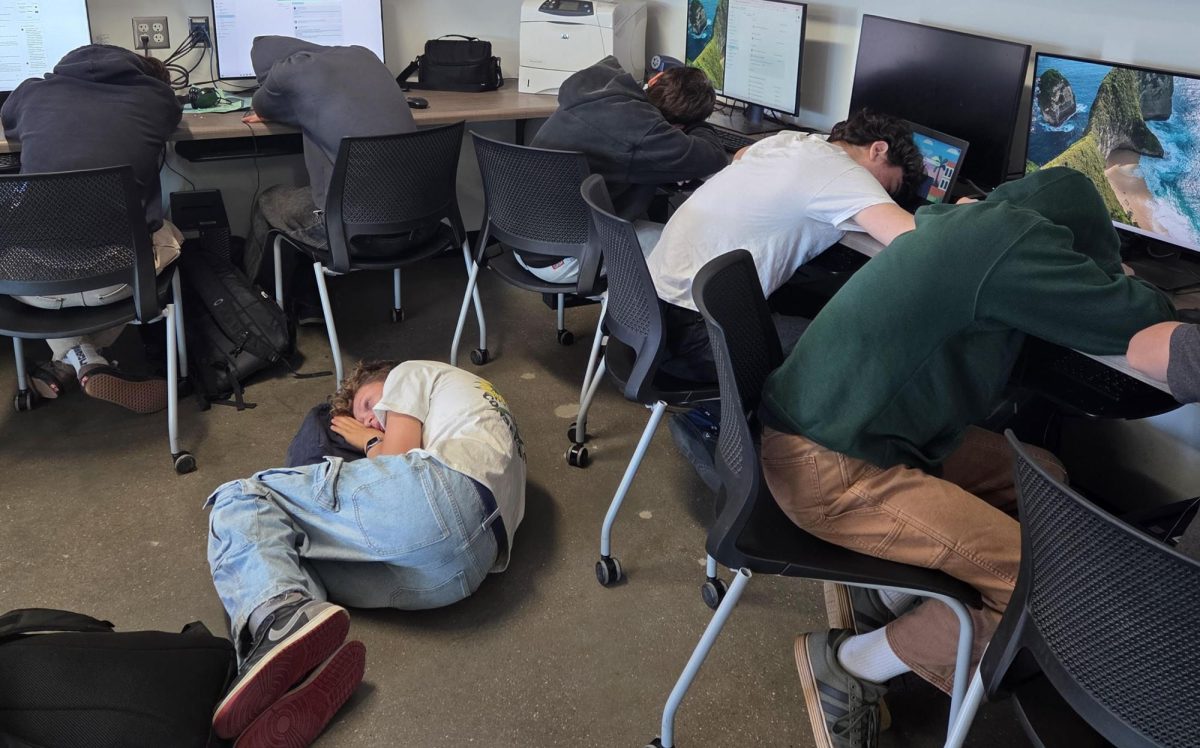
Students at San Luis Obispo High School rush to class in the morning, a routine that often leaves little time for breakfast. First period Journalism boys are toast without toast. Photo courtesy of Expressions adviser Scott Nairne.
How important is breakfast to San Luis Obispo High School students’ well-being?
As more students head to class on an empty stomach, questions are growing about how skipping breakfast may affect mental and physical health, and daily academic performance. Skipping breakfast can have a serious impact on mental health.
“I usually skip breakfast because I don’t feel like it, and I need to get to school on time. It makes me groggy and hungry throughout class, and I’m usually less energetic. I do think school start times make it hard to eat breakfast because I already wake up early and still don’t have enough time,” said freshman Aden Kincaid.
While breakfast is often called the most important meal of the day, many students continue to skip it due to early start times, busy schedules, and lack of appetite in the morning. Research shows that missing breakfast can affect mood, focus, and stress levels, raising concerns about how students’ daily habits may be impacting their mental health.
Additionally, some students say that eating breakfast often depends on whether they have enough time in the morning. Others admit that skipping breakfast can lead to uncomfortable moments in class, such as stomach growling, which can feel embarrassing.
“I mostly rush in the mornings, which is why there are times when I do skip breakfast. But when I do have the time, I’ll have cereal or a snack,” said freshman Allisson Resendiz.
Health experts explain that eating breakfast helps stabilize blood sugar levels and provides the brain with glucose, its main source of energy. When students skip breakfast, they may experience fatigue, difficulty concentrating, and irritability, which can affect mood and stress levels. Studies have linked regular breakfast consumption to better focus and more stable mental health in adolescents, suggesting that skipping breakfast may contribute to increased feelings of anxiety or low energy during the school day.
Further research also suggests that skipping breakfast can disrupt the body’s stress response and increase feelings of anxiety.
“It affects my appetite and makes me feel worse,” said freshman Robert Correa Reyes.
As students rush to beat the bell each morning, breakfast is often forgotten, pushed aside for a few extra minutes of sleep or getting ready. Yet its absence can follow them through every class, affecting energy, focus, and mood.
So the question remains: is skipping the first meal of the day truly worth it?
The SLOHS Cafeteria offers all students a free breakfast. But sleepy students can’t even make it in time to take advantage.
Source: cambridge.org