



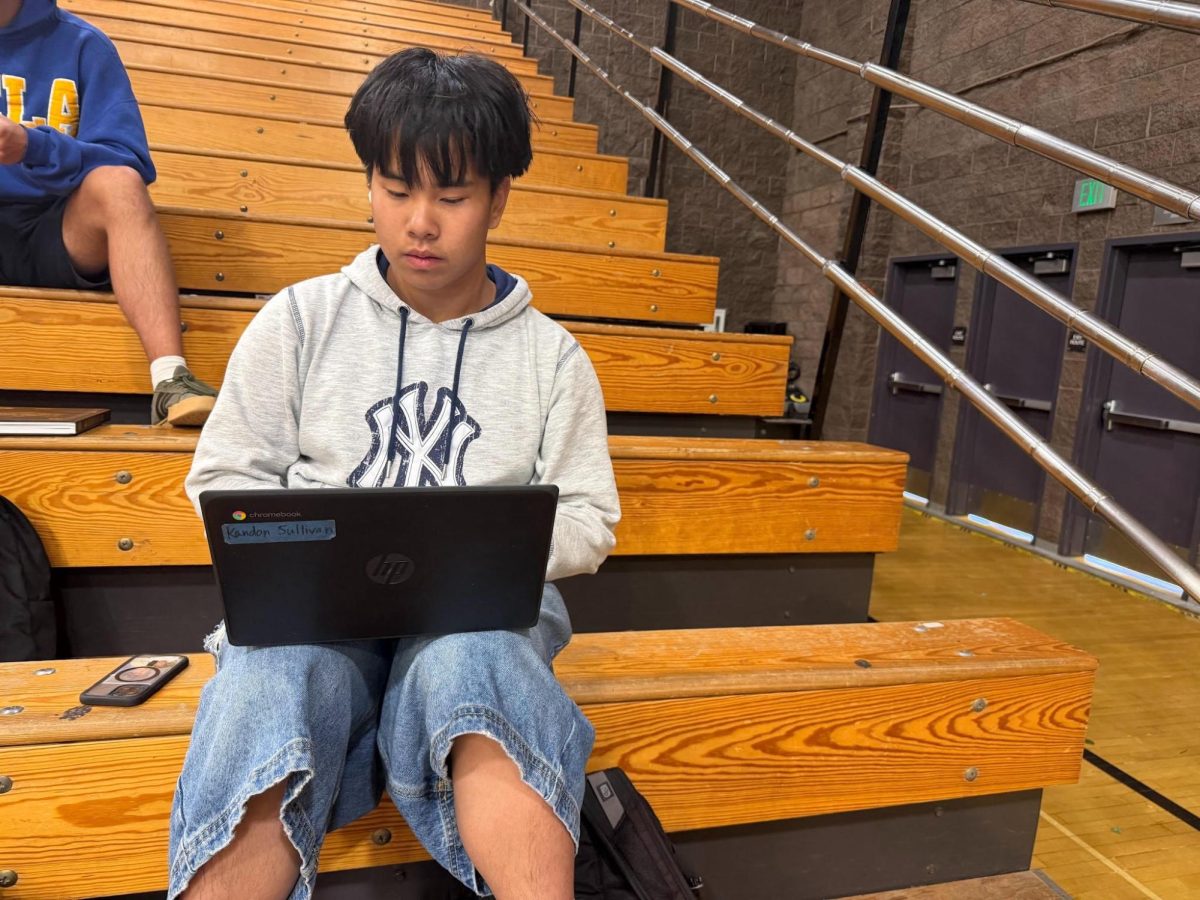


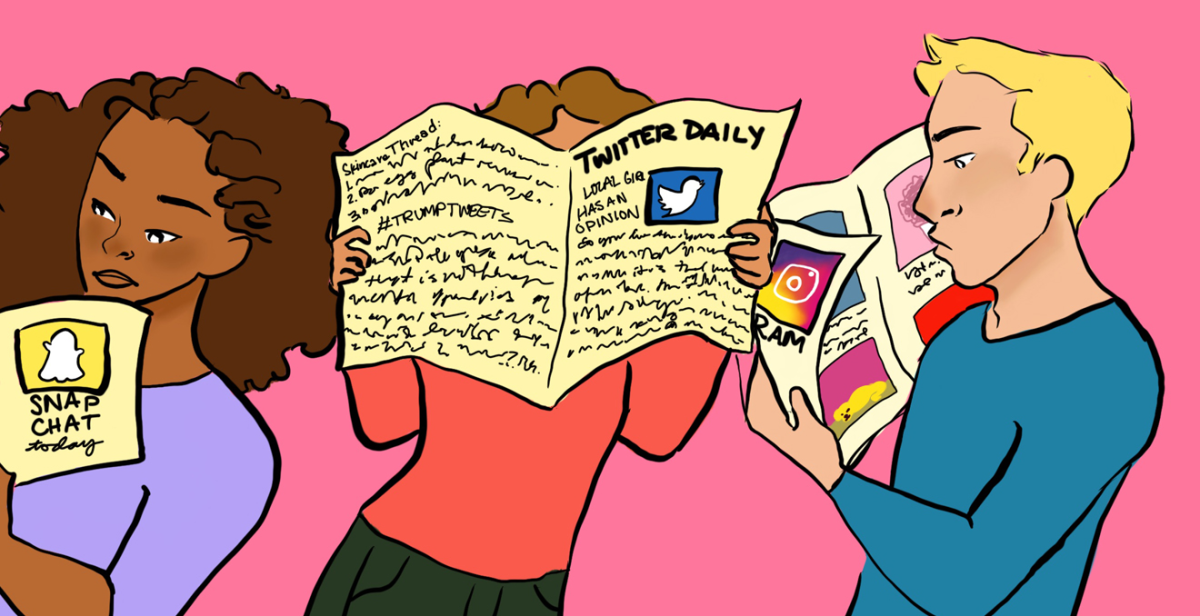






























Many people utilize social media as their primary news source, but can it ultimately be harmful? Graphic courtesy of Pepperdine Graphic reporter Madeline Duvall.
Social media’s primary appeal, as many San Luis Obispo High School students can attest to, is the wide range of available information that can seem more accessible than traditional news outlets. While this can be a benefit in some situations, it can actually lead to a less informed perspective on current events, and sources of news consumption should be balanced accordingly.
When students leave high school, it gets worse. 76 percent of U.S. adults between the ages of 18 to 29 say they get news from social media.
Getting news through a personalized algorithm greatly decreases the range of information we receive. When on social media, we are mostly shown topics that an interest has been demonstrated towards in the past, rather than the more varied stories available through traditional news outlets.
“It seems the majority of people are getting their news from social media sites, and I do think that does impact what kind of news is targeted towards you, because one of the things about social media is that it’s very algorithm driven. And so the incentive structure for social media is to keep your attention, not necessarily to keep you informed,” said Wellness Center counselor Austin Miller.
Not only is the range of information presented by social media less than that of a traditional news site, its format is the most significant difference.
“Social media news often feels more urgent and emotionally charged due to its interactive nature, whereas traditional outlets typically provide a more detached, structured, and curated perspective,” said freshman Anika Zachmeyer.
The interactive and personalized aspects are not the only issue. Most people consume its short-form content in long, doom-scrolling sessions, rather than in moderation. According to researchers at the University of North Carolina at Chapel Hill, this can cause overwhelm, or “news fatigue”.
“The issue is when news fatigue leads to news avoidance, which means that because you’re so fed up with the news, you avoid it all. Then the problem is that you won’t be able to access the information you really need that is essential for your everyday life, your health or political participation,” said UNC Chapel Hill graduate student and researcher Heesoo Jang.
Staying updated on news is crucial, and social media can actually limit the ability to do so. It doesn’t need to be avoided entirely, but mindfulness is always important.
Everyone, including SLOHS students, should be aware of the ways in which they consume news. Intentionally researching current events and avoiding overwhelm, will better maintain your mental health, and therefore your ability to be an informed and active member of society.
Sources: pewresearch.org, psychologytoday.com, unc.edu