







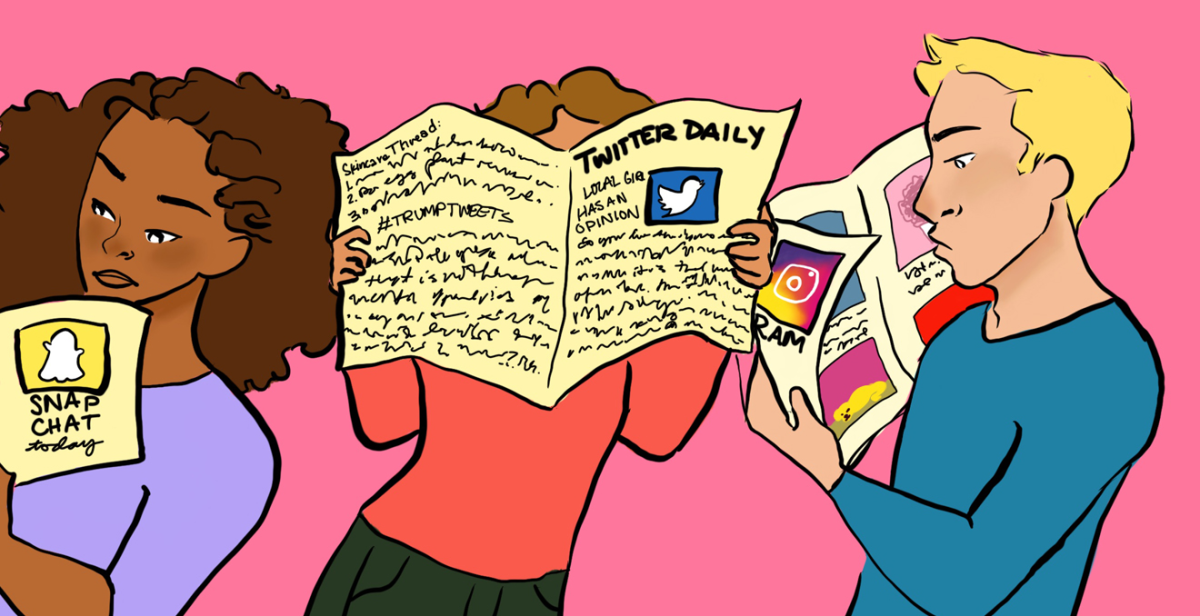






























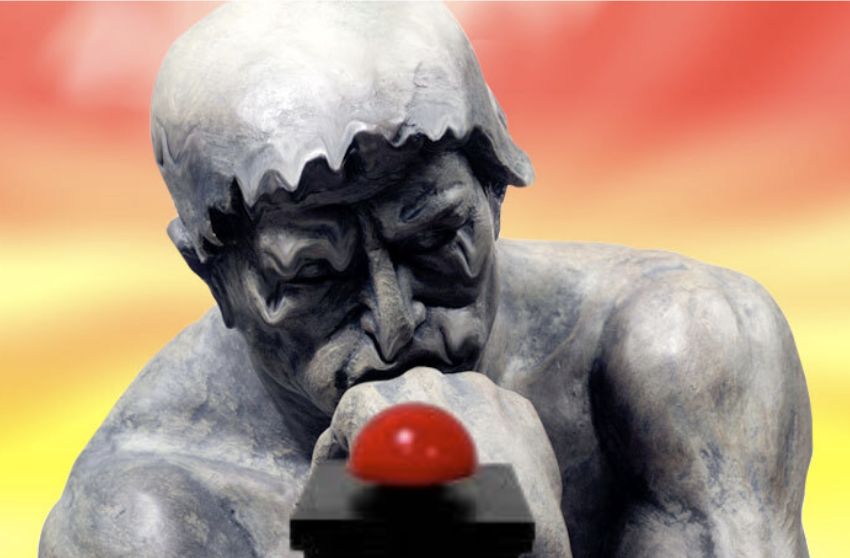
The Thinker wonders, “Is being hurt better than being bored?” as he contemplates a life of action. Graphic courtesy of Joseph Spargo.
Humans don’t like boredom. When bored, they feel uncomfortable. By doing the easiest possible way to get a short burst of dopamine, the discomfort fades. The truth is, humans are addicted to doing fun or entertaining things, which makes boredom feel even more unbearable than it should be.
“We are really addicted to dopamine hits constantly, and it’s one, making us unproductive, and two, making us sad, because we’re not able to just sit with our thoughts anymore. It has to be always rushing to the next thing, the next dopamine hit. I think it’s really started to disconnect us from the real world, where things happen slowly, and you enjoy things just because they happen, instead of always having to seek out satisfaction,” said freshman Phineas Kean.
The way in which the human brain has been rewired is to instinctively seek the closest and easiest possible burst of dopamine. This makes boredom feel like a withdrawal. In July of 2014, an experiment was conducted in which people had to sit alone in a room for fifteen minutes with nothing to do. Except, in front of them lay a button. When they push it, it would administer a painful electric shock. A large majority of people gave themselves shocks instead of sitting alone with their thoughts.
“I guess it’s because they were bored and they were just looking for some sort of action. They were used to such sudden dopamine hits that maybe they just felt like they needed something other than boredom,” said freshman Sam Peterson.
These participants would much rather feel pain than have to carry the weight of their own thoughts. Sitting alone, with no source of dopamine, unsettles humans so much so that pain is a better alternative to boredom. Why have we humans come to develop such inattentive and distractible minds?
“Social media is definitely depleting our attention spans and messing with our brains. Our reward systems no longer allow us to have meaningful connections or have actual conversations anymore,” said Peterson.
By staring at a screen that rewards the brain with little bite-sized snacks of dopamine, the brain goes into autopilot mode. Stressful thoughts are silenced, duties are ignored, and any worries go away. The problem is, as soon as the brain is cut off from dopamine, the mind becomes irritable, the legs tremor, and it finds a way to get a little hit. All of these manifestations are the common signs of withdrawal, those that many would observe in a drug addict cut off from drugs, or an alcoholic away from a drink. However, just like any other addiction, it can also be broken.
“I feel like you need to take joy in small things. You need to really enjoy what you have now and not be concerned about what you can do next,” said sophomore Collin Heying.
In essence, boredom allows humans to sit with their thoughts and reflect. The constant craving for dopamine and entertainment strips us of that skill, making our brains dependent on short-term happiness. In the long run, this will prevent finding happiness in long-term goals that require much time and patience. Watching videos one may not even remember the next day is cheap dopamine fuel for the brain, while making progress in a great book and later finishing it feeds the mind with sustainable and purposeful enjoyment.
So, pick up that book you’ve been telling yourself you’ll read, or at least invest your time in something with purpose. Your mind will thank you in the future.
Source: nih.gov