































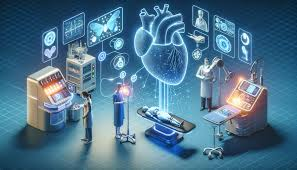
Artificial Intelligence has already started and will continue to Transform Modern Healthcare. Photo courtesy of Marketsandmarkets.com
With rapid technological advancements, AI is emerging as a powerful force in medicine, promising to improve diagnostics and enhance patient care. At the same time, it raises important questions about ethics and data privacy signaling a potential shift in how healthcare will be practiced in the coming decades.
To better understand how students view the future of AI in medicine, several were asked to share their thoughts.
Expressions: What comes to your mind when you think of AI in medicine?
Freshman Bella Qu: I think AI could be useful for health care, but at the same time I don’t think it’s a good thing to become very reliant on AI, because it might not be very reliable.
Junior Ivanna Ordaz Rios: When I think of AI in the medical industry I think about danger and rapidness. This is because it may cause mistakes—that there is no room for in the medical field— and the fast aspect of it comes out due to the reason that doctors work faster if they go blank.
Freshman Venezia Ramirez: I think of AI being a tool to generate different types of ideas when it comes to creating medicine or antidotes that can help cure illnesses and diseases.
Expressions: Do you think AI will change healthcare in the near future?
Qu: I think it will be used for healthcare in the near future for genetics, which could be more harmful than helpful. It could lessen the job market for doctors and allow them to be not as good at their job because they are reliant on AI.
Ordaz Rios: I do believe AI will change healthcare in the near future. Although AI can be a risk, it may help doctors diagnose illnesses faster and get to the individuals and communities faster. AI could also make healthcare more accessible by supporting virtual visits and sharing out plans that will directly affect them within the visits.
Ramirez: I think AI will have an impact on the medical field if they begin to use it a lot, but I personally think that it’s a very universal topic, and that we shouldn’t heavily rely on AI for our health. Especially because it’s not an actual person, so it’s not the same thing as being treated by a doctor or a nurse.
Expressions: What concerns do you have about using AI in medical decision making?
Qu: I don’t think AI should decide everything, because they can be wrong sometimes, which in the medical industry, could lead to a fatal mistake.
Ordaz Rios: Using AI in medical decision making can be risky. AI could always make a mistake or have a lack of efficiency. AI could be used but always with human involvement and reviewing.
Ramirez: One concern I have about using AI in medical decision making is that it could make mistakes or miss important details about a patient, and AI doesn’t fully understand human emotions or unique situations, so relying on it too much could lead to the wrong decisions.
Expressions: Do you believe patients should have the right to refuse AI involvement in their care?
Qu: Yes, because it is reasonable to not trust AI with life altering decisions and everyone should have the right to say no.
Ordaz Rios: Patients should always be allowed to refuse any involvements that affect them or concern them. Especially if AI is included in their care, many people have different opinions towards AI; some thinking it’s bad and others believing it’s useful. Ultimately, people should have a voice and their decisions should be respected.
Ramirez: Yes, because they shouldn’t be obligated to because every patient is their own person and especially when it comes to health care there should be a lot of trust and comfort, and if that isn’t there, then I feel like it could definitely be an issue.
As AI continues to advance, it is clear that it will play an important role in the future of medicine. While it does offer efficiency, accuracy, and accessibility, many believe it should remain as a supportive tool rather than a decision maker.