


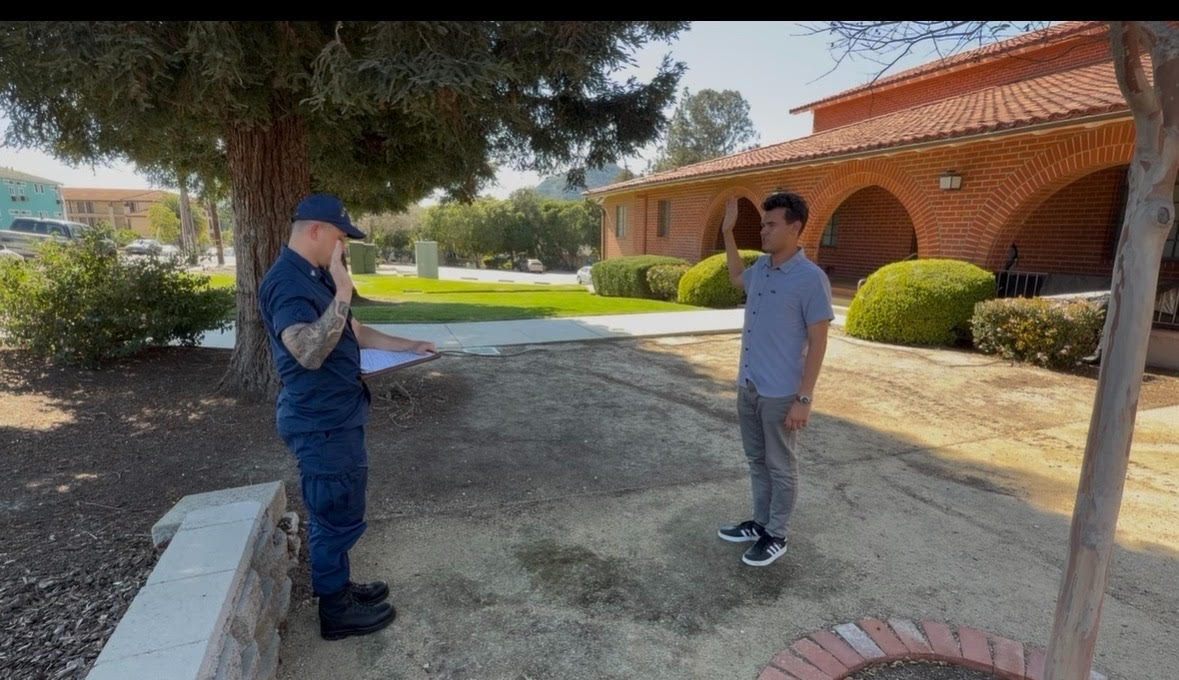

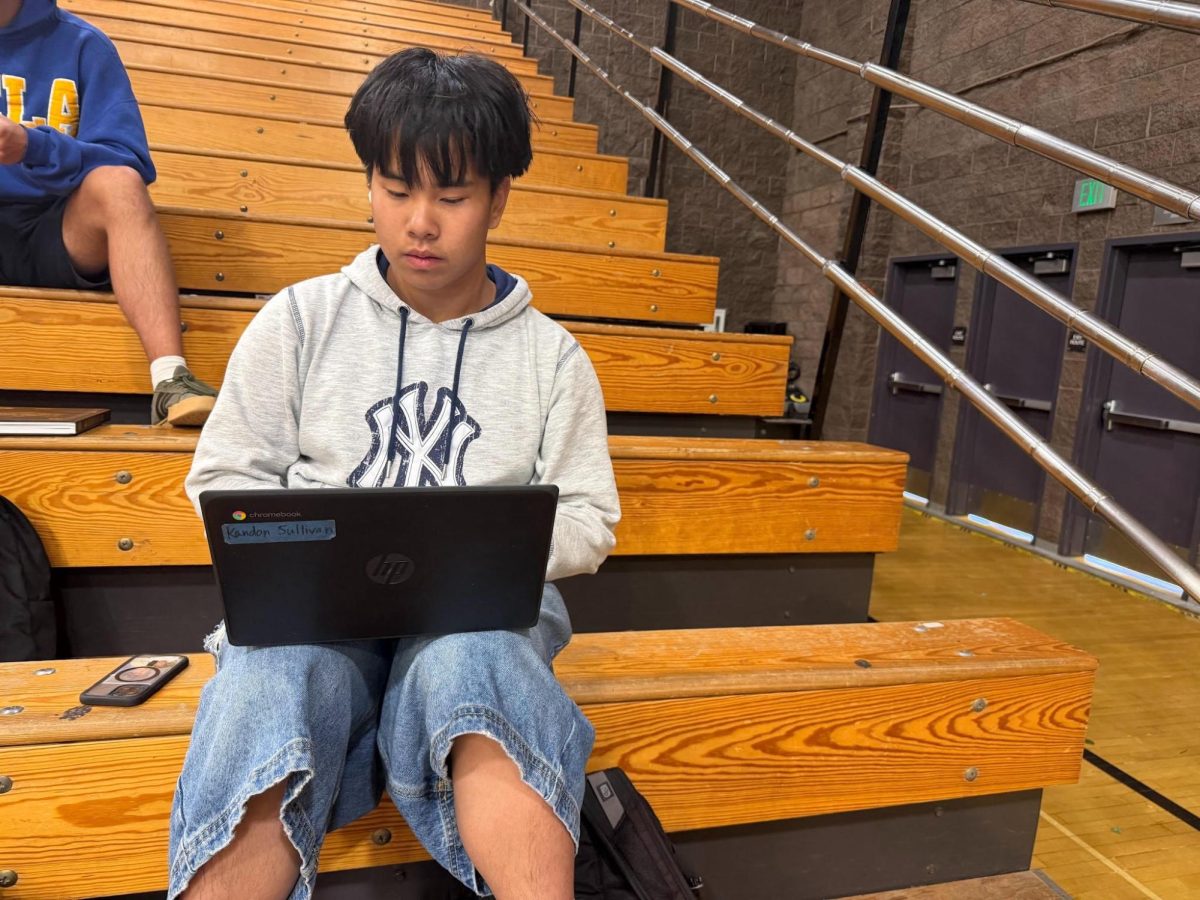









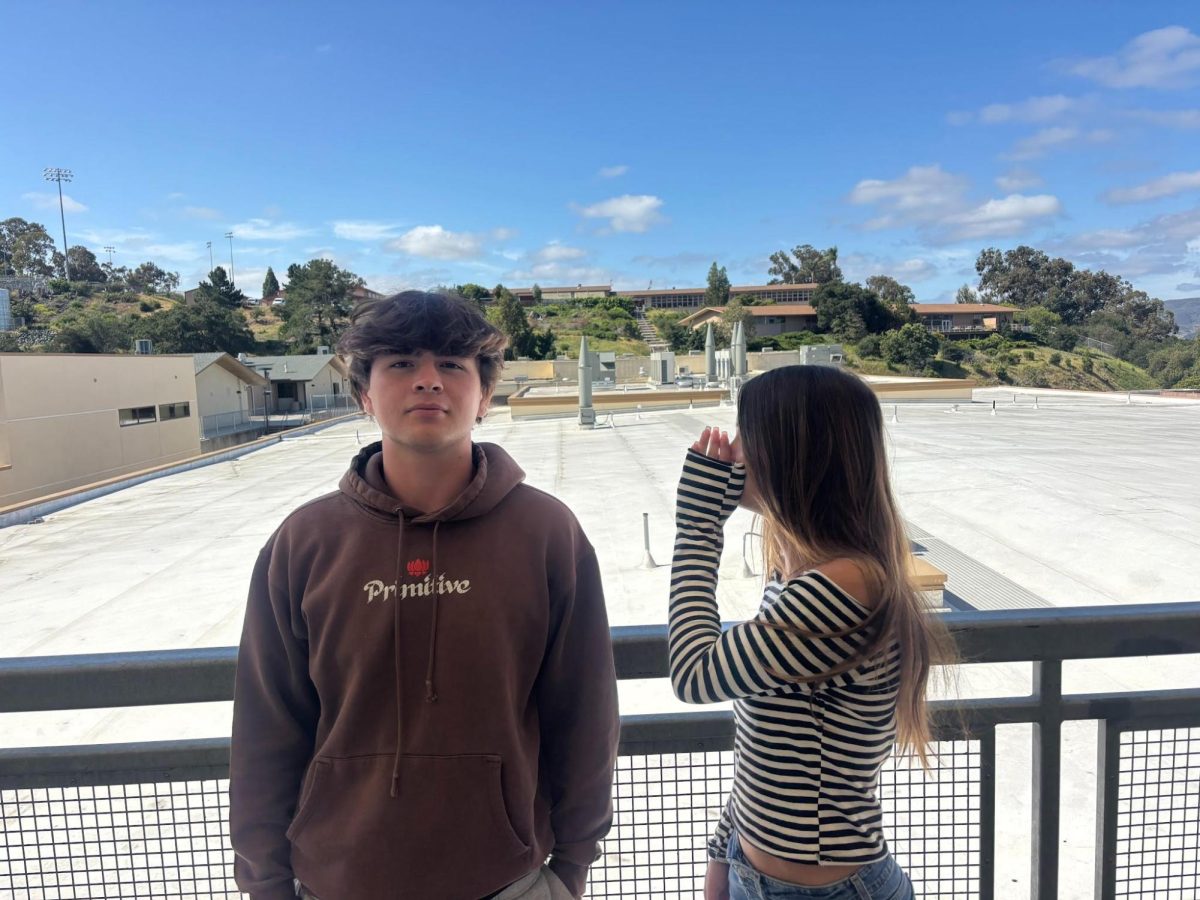









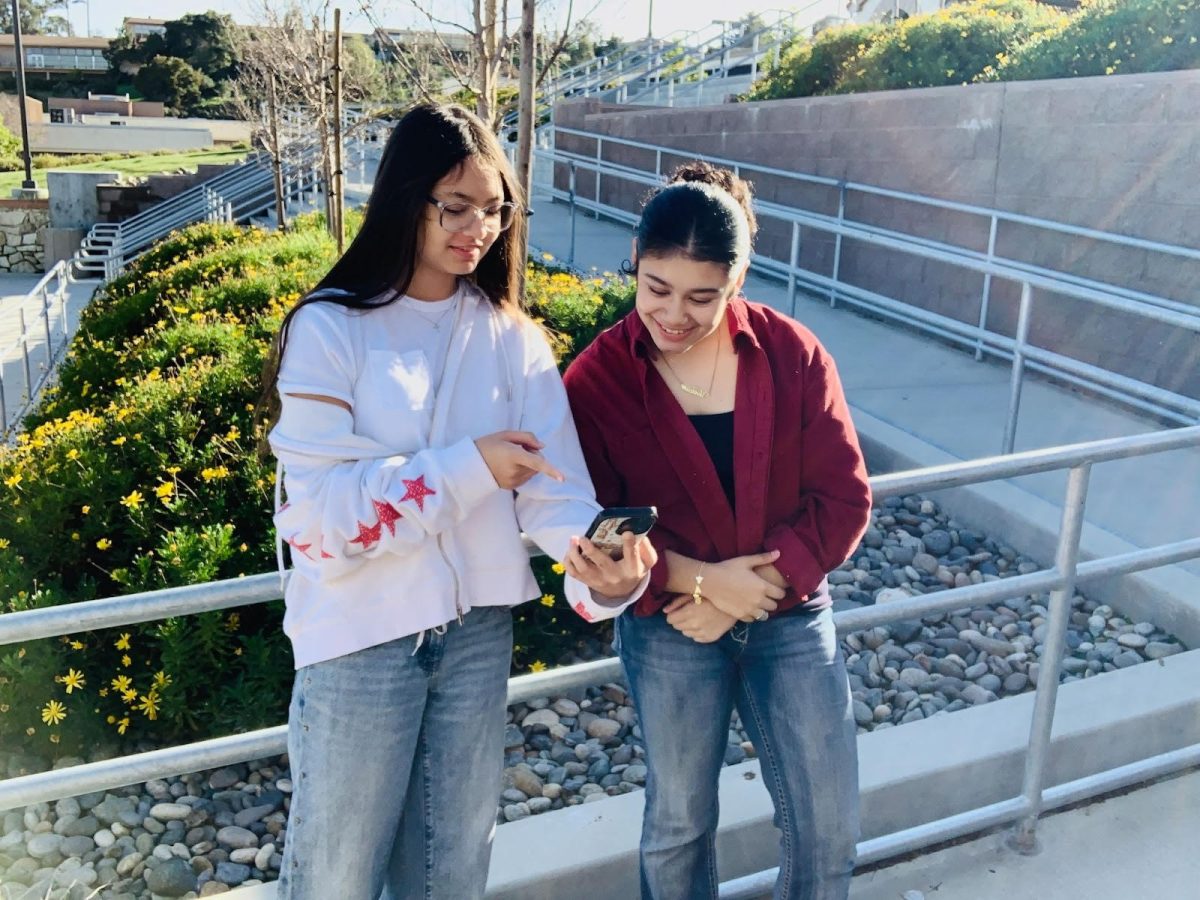
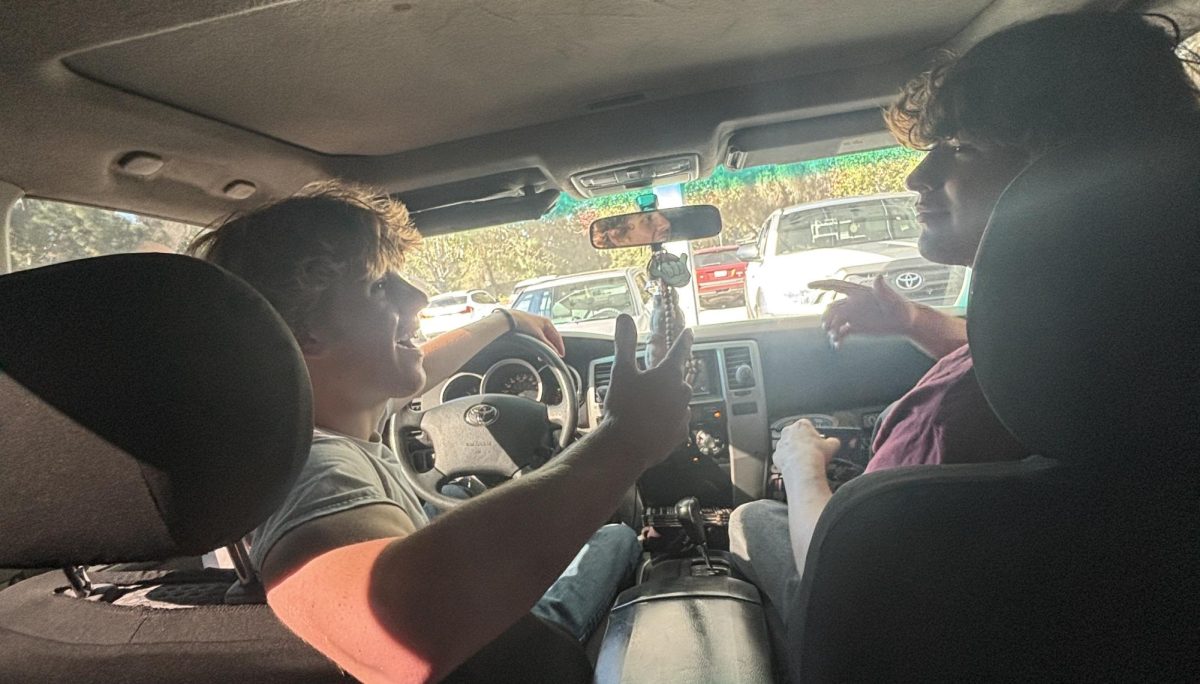





Balancing school and part-time work, many high school students are learning time management, responsibility, and independence while preparing for life beyond the classroom. Photo courtesy of The Miner Detail.
San Luis Obispo High School students Zoe Waddell, Josue Saavedra, and Hudson Zurbach, along with many of their peers, balance the demands of school while working part-time jobs. Between classes, homework, and extracurricular activities, students are learning how to manage their time and responsibilities. While having a job can be stressful, these students say it has helped them become more independent and prepared for life beyond high school.
Expressions: Can you describe your job and what a typical workweek looks like for you?
Sophomore Zoe Waddell: I’m a busser at an upscale Mexican restaurant. A typical workweek is either working on Friday or Saturday, and I go in at 5:00 or 6:00, and I usually end up leaving by 9:00 or 10:00, depending on when we close. I do things like bringing people chips and water when they first come in, cleaning up their tables when they leave, and then closing down the restaurant when everyone has left.
Junior Josue Saavedra: I work as a lifeguard at Sinsheimer pool and it’s a pretty difficult job. My typical workweek looks like setting up the pool, and once people come in I get on stand. It’s a pretty tedious job to make sure you’re always scanning the water and always hunting for people who are in need.
Senior Hudson Zurbach: I work at Central Coast Gymnastics, and I work for events and birthday parties. Usually, the events are on weekends, so I would get there around 4:00 to set up and go home at 10:00.
Expressions: How do you manage your time between classes, homework, extracurriculars, and work?
Waddell: Since I usually work one or two nights a week and on weekends, it’s good because I can schedule my extracurriculars and homework for other nights of the week, but sometimes I have to prioritize my schoolwork.
Saavedra: As a lifeguard, I receive a fifteen-minute break every hour and during that break, I typically do my homework or study for my tests.
Zurbach: I am very lucky with my job because we have a policy where you have to work three events each month, so I always make sure I have my month planned out before I schedule myself, knowing what I’m going to do school-wise and when tests are coming up. I will schedule my work when I know I have time because I put school over my work.
Expressions: What motivated you to get a part-time job while still in school?
Waddell: One of the things I love to do with my friends is to go out to eat, which obviously costs money, and if I don’t have an income, then I’ll just lose money.
Saavedra: I got a speeding ticket last year, and I needed to pay it off, and I also wanted to buy a new guitar.
Zurbach: The money motivates me because it’s nice to have the ability to go out with friends and have some money to spend instead of having to ask my parents for money every time I go out. I also think the experience is nice, so when I’m out of high school and I want to have a part-time job in college, I will have the experience to put me ahead.
Expressions: How has working affected your academic performance or stress levels?
Waddell: I don’t think it has affected my academic performance a lot. For my stress level, it’s just a fast-paced environment, so when I’m there, everything is going on all at once.
Saavedra: I don’t think it has affected my academic performance much, mainly because I make sure not to work too much, or it will start affecting my school performance. And lifeguarding, although tedious, is a pretty relaxing job.
Zurbach: For me, I don’t think it has affected my academic performance or stress levels because I developed the skills throughout high school to learn how to prioritize school over work.
Expressions: What skills have you gained from working that help you in school or daily life?
Waddell: I think I’ve gained a lot of people skills because I have to be super friendly if I want to get good tips. It has also taught me how to be assertive because if I don’t ask for what I want, it’s not going to work.
Saavedra: Lifeguarding has taught me a lot about safety and first aid, and I feel ready to save anyone. For example, if someone passes out and goes into cardiac arrest, I will be able to save them, and it gives me peace of mind as I walk through campus.
Zurbach: I have learned how to interact with parents and people older than me, especially when kids are coming to and from a camp or a birthday party, and I’m able to be professional and introduce myself, and know how to go out into the real world and know how to stand out as a role model. I believe working has helped me manage my time at school better.
Expressions: What advice would you give to other students considering getting a part-time job?
Waddell: Make a resume so if you get offered a job, you can just hand it right over.
Saavedra: Try to get a job where your boss is very flexible and will assign you hours that are reasonable. It’s up to you to find what you are capable of doing because in the end I believe school is the most important, and you want to make sure that your work doesn’t affect your school performance.
Zurbach: I would highly recommend getting a part-time job if you want the experience and extra money. If you’re eligible, try to do the work experience class because it allows you to have one less class of homework. You should also make sure that you don’t let your part-time job overcome your schoolwork, especially if you want to go to college, because it’s not worth sacrificing your grades or the college you want to go to just for some extra pocket cash in high school.
Working part-time while attending high school presents both challenges and rewards for students. Although balancing academics, extracurriculars, and work can be stressful, many students find that having a job teaches them valuable skills. These experiences not only help them succeed in school but also prepare them for the real world.