
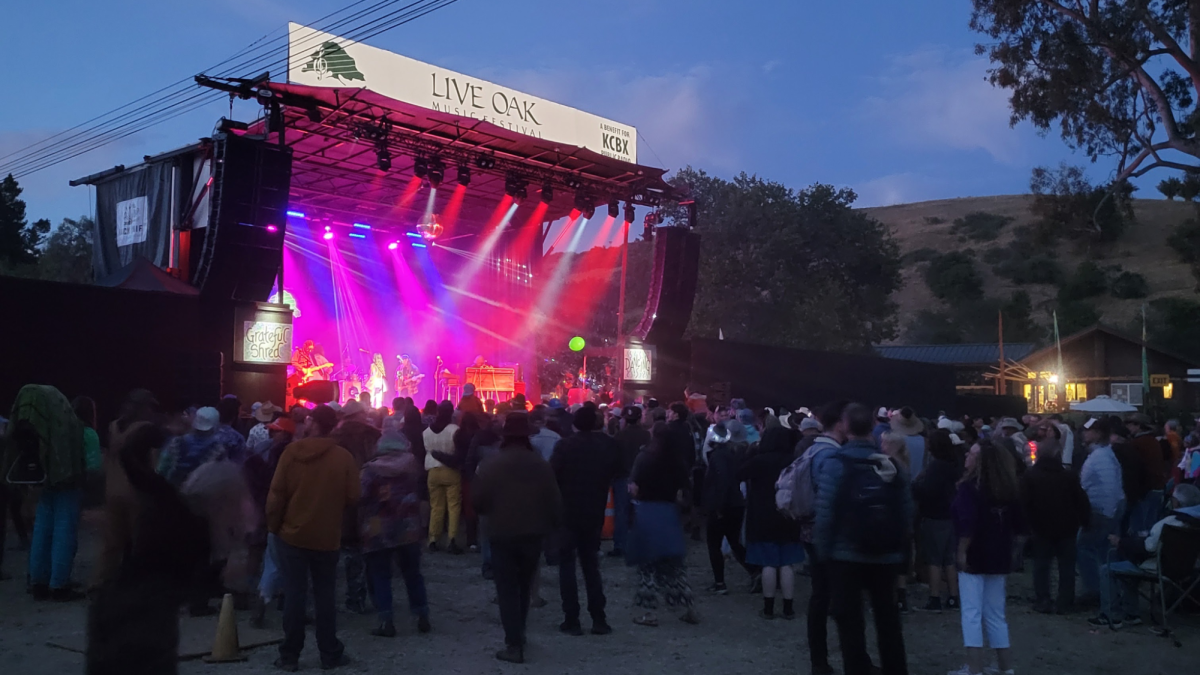





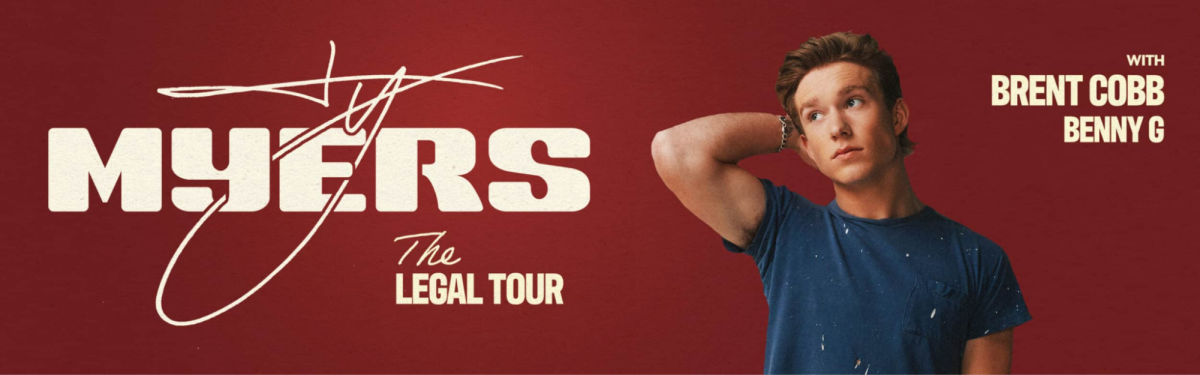








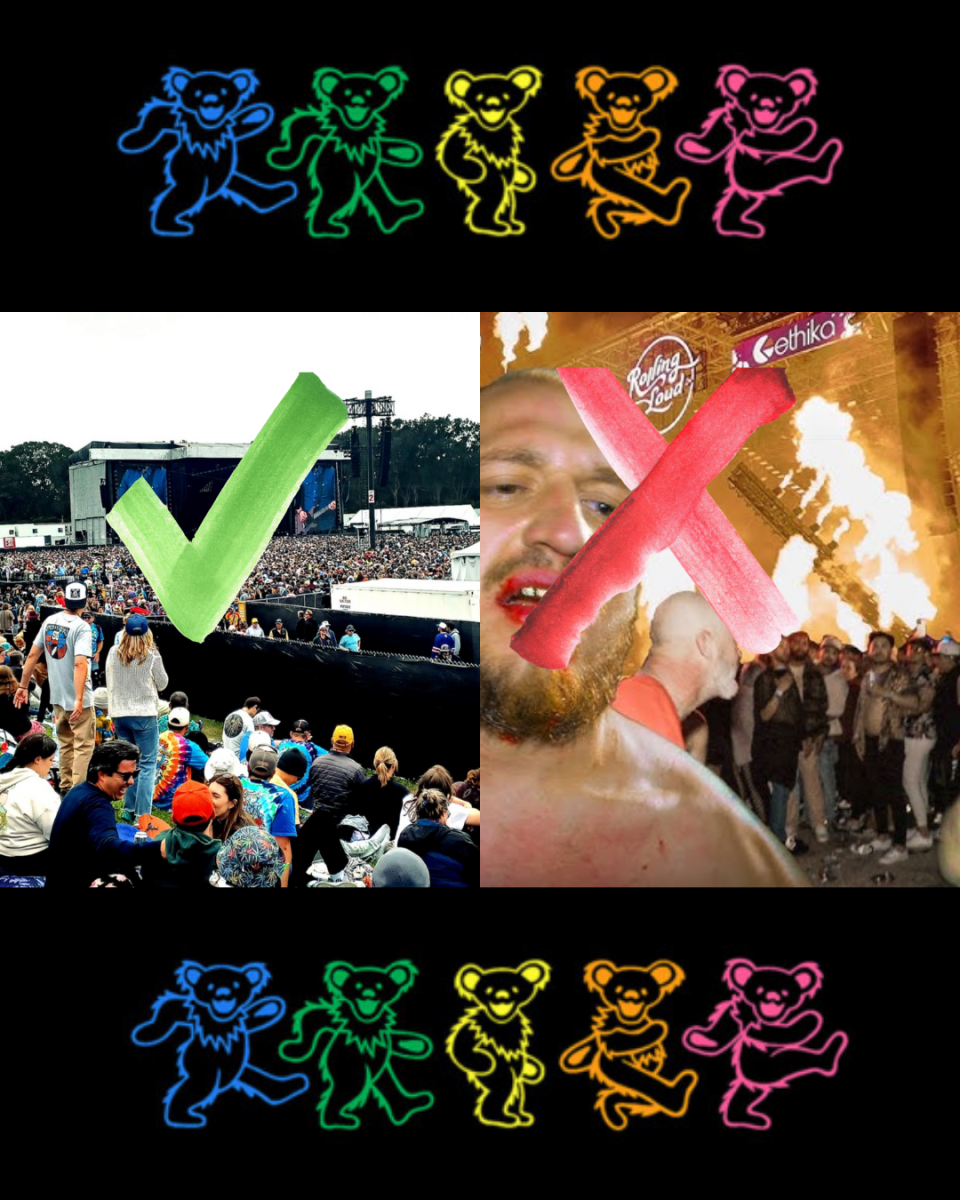
Dead and Company’s sixty year anniversary concert contrasting the chaos of rolling loud 2025. Graphic courtesy of junior Oscar Fenton.
Modern rap music is corrupting the students of San Luis Obispo High School but some staff and students offer a sixty year old remedy, The Grateful Dead.
Modern rap is the theme music of SLOHS these days, particularly the sub genres of techno and drill that have become prevalent in the last few years. Previous mainstream rappers like Kanye, J Cole, and Kendrick have either tried to adapt to the shifting sound or stepped out of the spotlight loosening their chokehold on the industry. This opens lanes for new artists like OsamaSon, Netspend, and Xaviar whose fast paced over-produced muck stimulates what’s left of modern teenagers attention spans.
“The underground scene with artists like Brendan Jones and like Xavier, they’re kind of popping right now, and the sounds kind of seemed to alter, you know, to like less lyrical based rap,” said junior Evan Aquino.
Drill music which started in varying neighborhoods in south side Chicago and other big cities primarily credited to “Chief Keef” and recently deceased “King Von” in the 2010s/20s blew up, its content depicted the life of violence and criminal activity that riddled the low in come housing developments also known as “projects” that these rappers lived in.
This music remained as an underground sub genre, its chaotic production consisting of blaring 808s, snapping high hats and snares, and the occasional adlib followed by overdubbed gunshots and tire screeches.
Drill itself birthed a similar sub genre; “Techno.”Techno rap is the computerization of drill, the same chaos but now electronic. Both genres’ top artists now find themselves standing with the past pillars of the rap scene and too many towers over them as the pinnacles of the rap itself.
To the dismay of many, the chokehold the rap scene has on the youth of today is slowly but surely killing the music of the past, the bands and icons that innovated popular music further than ever before are dying out in the chaos of rap. One of these bands has had its music rooted in our country and across the globe for sixty years, its culture built on peace and love, building a family of all races, genders, sexualities, and all the differences that separate so many.
The Grateful Dead formed in the Height Ashbury district of San Francisco where their genre bending rock drew in only the most explorative of the psych rock scene in the bay area and later America, but as The Grateful Dead grew so did their music expanding over the last sixty years growing and shifting between sounds, members, and most importantly fans. From trust fund kids and state senators, to bikers gangs and convicts the dead fan base stretched across America and the world with the same narrative of equality, peace, and love among all. Some SLOHS staff share similar views and fears about the state of music and what is at stake.
“I was blown away to hear it, I think a lot of music that gets popular are usually pandering to the lowest common denominator. Like, if you can make an algorithm to sell records. I feel like that’s kind of like Taylor Swift, like, all right, we know what people like, and we check all those boxes, so hearing that OsamaSon song, it’s like, Wait, who thought people would like this,” said math teacher Scott Rosenblum.
Mr. Rosenblum sees how music used to draw people in with the stories and narratives displayed through intricate lyrics and instrumentation creating melodies that invoked emotion and passion across generations of listeners. One of the bands that invoked the passion and emotion for him is The Grateful Dead.
“I grew up really enjoying the Grateful Dead for their songs, I actually didn’t get into the live jammy aspect of it until later, but I really appreciated the songwriting and the lyrics and the melodies…It would be cool to see a resurgence of people enjoying the music that cares about music theory,” said Rosenblum.
Other staff are drawn to rock and roll and the music of The Grateful Dead, they see the beauty of the music and share fears of its slow extinction.
“I like that music, because it makes you think and it makes you have to sort of follow along. It’s not just the same kinds of four bars or the same bridge, chorus bridge, that you’ve heard 100 times. You can listen to dozens or hundreds of different versions of the same song, and you’ll find something new every time,” athletic director Adam Basch.
Music is subjective so expecting to be able to impose Rock and Roll or specifically The Grateful Dead on students is ambitious and unrealistic, but it is imperative we don’t let this music die in history due to shrinking attention spans and the developing insular attitudes of teenagers.
High school students are living through one of the most impactful times of their lives, therefore, expanding horizons to the arts of the past is imperative to innovation of future art, and imperative to pushing the future generation to be the most creative, knowledgeable, and benevolent it can be.
Tigers should seek out music and culture of the past and indulge themselves to not waste the opportunity to experience something different and unfamiliar, ask a teacher or parent for music that has influenced them and see if you can share a similar love and passion for it.